

Featured content
PFAS in food: Are you testing for enough?
PFAS regulation is expanding and analytical methods are becoming more capable. How far should food businesses test?
 Opinion
The canaries are singing: is Britain finally waking up to food security?
With the UK’s food and drink trade deficit at its highest level since 2000 and warnings mounting from across industry and academia, one of the sector’s leading voices argues that food security is no longer a peripheral concern – it is a matter of national security.
 Article
New Food explains: What viable PFAS-free food packaging really requires
With new EU limits on PFAS in food-contact packaging now in force, New Food speaks to VTT experts about balancing product performance requirements with viable PFAS-free alternatives.
 Article
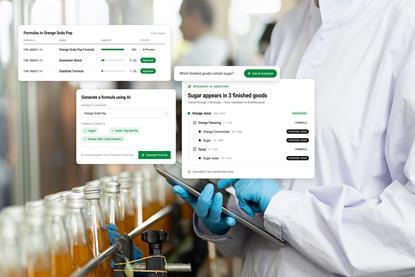
Why fragmented product data raises the cost of food non-compliance
Specright’s Andy Stark explores how fragmented product data can increase compliance risk, slow reformulation and drain R&D capacity – and why trusted data is becoming critical to effective AI adoption.
News
 News
NewsFood waste consuming 1.4 billion hectares of land globally, FAO warns
Food that is never eaten occupies 1.4 billion hectares of land worldwide, with the UN warning that progress on reducing food loss and waste has stalled and global targets are being missed.
 News
NewsFSA issues new regulatory guidance for cell-cultivated food developers
The Food Standards Agency and Food Standards Scotland have released new guidance on regulatory authorisation, growth media assessment and toxicology for businesses developing cell-cultivated food products in Great Britain.
 News
NewsTesco launches nitrite-free bacon and ham range
Tesco has introduced a new own-brand range of bacon and ham made without added nitrites, as online consumer searches for such products rise by more than 360 percent year-on-year.
 News
NewsShorter shelf life wrongly signals healthier food, study finds
Research from the UBC Sauder School of Business suggests shoppers use shelf life as a shortcut for judging how natural and healthy a product is, despite no reliable link between them.
From our partners
 Article
Plant-based homogenisation starts with the right pre-mix
Steffen Jahnke of GEA explores how the right pre-mix sets the foundation for successful plant-based homogenisation, and what scale-up really tests.
 Article
The Process NIR Readiness Checklist
Successful process NIR starts before installation. This checklist helps manufacturers assess readiness, identify gaps and make the right decisions early to accelerate deployment and results.
 Article
PFAS analysis at a turning point: from trace detection to defensible, sustainable decisions
How laboratories can manage contamination, matrix effects, expanding analyte lists and regulatory change – while reducing the environmental cost of high-throughput LC–MS/MS.
Upcoming Webinars

Human safety assessment for novel foods: de-risking the path from concept to compliance
Join this free webinar to discover how a strategic, tiered approach to human safety assessment can help you build the right evidence, reduce unnecessary testing and move towards regulatory approval with greater confid

Developing foods for the GLP-1 era: reformulation, claims and market readiness
As GLP-1 use redefines appetites and nutritional priorities, expectations around what food products need to deliver are changing. This webinar explores nutrient-dense reformulation and the claims and labelling challenges involved in bringing these new products to market.
PFAS in food: Are you testing for enough?
PFAS regulation is expanding and analytical methods are becoming more capable. How far should food businesses test?
Human safety assessment for novel foods: de-risking the path from concept to compliance
Developing foods for the GLP-1 era: reformulation, claims and market readiness
PFAS in food: Are you testing for enough?
On-demand Webinars




Join now
Unlock exclusive industry insights
- Bookmark articles and resources to access anytime
- Enjoy free access to industry leading resources, webinars and insights
- Stay informed with in-depth coverage of food safety, quality, innovation and regulatory change from across the global food and beverage industry
- Receive updates and recommendations tailored to your professional interests