


Featured content
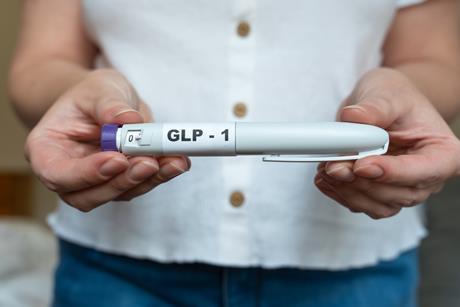
GLP-1 friendly’ has no regulatory definition and manufacturers are shipping it anyway
New Food explains: ‘GLP-1 friendly’ has no regulatory definition. What manufacturers must verify before using the term.
 Opinion
Imported eggs and Salmonella: the cracks in Britain’s food-safety defences
Recent Salmonella outbreaks have exposed vulnerabilities in UK egg supply chains. Chris Elliott examines their complex routes into food service and where improvements are needed.
 Article
Building food supply chain resilience through data-sharing approaches
Modern food chains must shift focus from quality and sustainability to agility and resilience; supply chain experts from Wageningen University & Research explain why data sharing is the way to go.
 Article
New Food explains: How FSA national regulation proposals could reshape industry oversight
The UK Government has asked the FSA to develop national oversight of large food businesses. Walker Morris’ Chris McGarvey explains what it could mean for the industry.
News
 News
NewsHealthy checkout rules reduce soda and small-pack candy sales, study finds
A landmark Lancet Public Health study links Berkeley’s healthy checkout ordinance to lower soda and small-packaged candy sales, while highlighting the need for stronger enforcement and wider policy action.
 News
NewsManitoba and EIT Food sign five-year agrifood innovation framework
Manitoba and EIT Food have signed a five-year collaboration framework to strengthen Canadian-European agrifood research, innovation, market access and sustainable growth.
 News
NewsEuropean trials find non-nutritive sweeteners do not undermine weight loss
A review of three large European trials has found that replacing sugar with non-nutritive sweeteners does not undermine weight loss, impair metabolic health markers or drive cravings for sweet foods, though researchers caution that sweeteners should not be viewed as a standalone weight-management strategy.
 News
NewsCocoa traceability pilot links physical authentication to digital passport ahead of EUDR
Most EU-bound cocoa still travels on self-declared paperwork. Three firms are testing a verifiable fix before EUDR lands.
From our partners
 Article
PFAS analysis at a turning point: from trace detection to defensible, sustainable decisions
How laboratories can manage contamination, matrix effects, expanding analyte lists and regulatory change – while reducing the environmental cost of high-throughput LC–MS/MS.
 Article
How laboratory AI agents can transform R&D and quality in the food industry
Food and beverage laboratories face growing pressure to innovate without compromising safety. This article explores how agentic AI can connect siloed data, strengthen predictive quality and accelerate R&D.
 Article
Why food laboratories need analytical systems that deliver more than sensitivity
Can laboratories increase sensitivity without compromising routine reliability, workflow efficiency or resource use? The LCMS-8065XE was designed to address these growing analytical demands.
Upcoming Webinars

Lab Meets Line: How Leading Manufacturers Are Closing the Quality Data Gap
Discover how leading food manufacturers are combining trusted laboratory reference data with real-time process measurement to improve quality consistency, respond faster to process variation and build a more connected quality control strategy.

Signal or noise? Making sense of food’s most confusing regulations
Join this free webinar to learn how to spot the signals early, turn regulatory uncertainty into commercial advantage, and make smarter decisions about your product portfolio.
Automated solutions for mycotoxins and vitamins in complex foods matrices
Learn how automation helps food testing laboratories address evolving regulatory requirements, achieve lower LOD/LOQ targets through effective sample clean-up, and analyse novel foods and other complex matrices.

Human safety assessment for novel foods: de-risking the path from concept to compliance
Join this free webinar to discover how a strategic, tiered approach to human safety assessment can help you build the right evidence, reduce unnecessary testing and move towards regulatory approval with greater confid

Developing foods for the GLP-1 era: reformulation, claims and market readiness
As GLP-1 use redefines appetites and nutritional priorities, expectations around what food products need to deliver are changing. This webinar explores nutrient-dense reformulation and the claims and labelling challenges involved in bringing these new products to market.
Lab Meets Line: How Leading Manufacturers Are Closing the Quality Data Gap
Signal or noise? Making sense of food’s most confusing regulations
Automated solutions for mycotoxins and vitamins in complex foods matrices
Human safety assessment for novel foods: de-risking the path from concept to compliance
Developing foods for the GLP-1 era: reformulation, claims and market readiness
On-demand Webinars




Join now
Unlock exclusive industry insights
- Bookmark articles and resources to access anytime
- Enjoy free access to industry leading resources, webinars and insights
- Stay informed with in-depth coverage of food safety, quality, innovation and regulatory change from across the global food and beverage industry
- Receive updates and recommendations tailored to your professional interests