




news
Crystallisation at an ideal temperature gives melt-in-your-mouth sensation
1 December 2015 | By NETZSCH Pumpen & Systeme GmbH
Special chocolate pump enables tempering across whole conveying area...
List view / Grid view
1 December 2015 | By NETZSCH Pumpen & Systeme GmbH
Special chocolate pump enables tempering across whole conveying area...


1 December 2015 | By NETZSCH Pumps & Systems
At a Brewing Company in Pennsylvania in the USA, the brewmasters turned to relia-ble NETZSCH NEMO® progressing cavity pumps for the difficult jobs of moving spent grain and yeast through the brewing process...
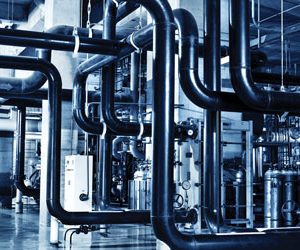

28 October 2015 | By Ulli Zimmer, Head of Sales, Business Line, Hygienic Pump Technology, GEA Tuchenhagen GmbH
Critical importance is placed on hygiene in the production of food and beverages. Strict hygiene regulations apply as they are set forth in legislation. In addition to assuring careful transport of food products, components used in the food-processing and cosmetics industries must satisfy many stipulations.
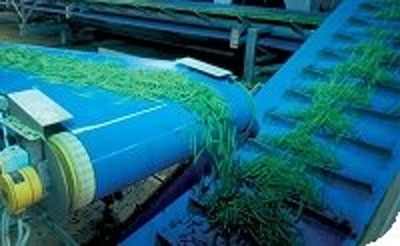
8 September 2015 | By Ammeraal Beltech
Ammeraal Beltech’s extensive industry-leading portfolio of specialist process and conveyor belting solutions will be on display at IBA next week in Munich...


20 August 2015 | By Katie Sadler, Digital Content Producer, New Food
CFT Haas Convenience Food Equipment GmbH has revealed the new CAIMAN D-324 capable of producing 19,500 rolled sugar cones per hour...
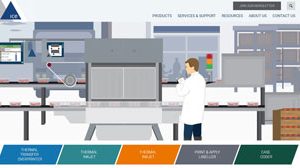
11 August 2015 | By Katie Sadler, Digital Content Producer, New Food
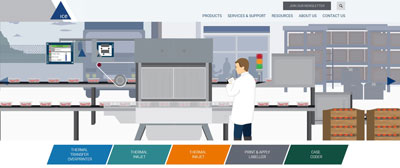
Interactive Coding Equipment (ICE), the UK based coding and marking solutions provider, has launched a new user-friendly website.
27 October 2014 | By Jon J. Kold, Chairman, EHEDG Conveyer Systems Subgroup
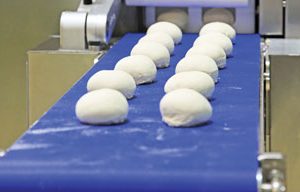
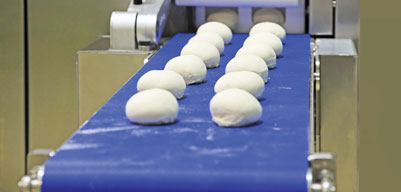
With a new guideline on hygienic design of belt conveyors for the food industry, the European Hygienic Engineering & Design Group (EHEDG) addresses two of the major challenges in safe food production. First, how to avoid contamination of food through inadequately designed processing equipment. Second, how to improve food safety without operating costs…
Recognised as a world leader with nearly 80 years of experience in providing technologies for extruded grains and cereals, Wenger Manufacturing continues to explore possibilities and bring new innovations to the industry. Recent developments have expanded the role extrusion can play in replacing traditional cereal processing methods...

4 November 2013 | By Roger Scheffler, EHEDG Member
Undoubtedly, stainless steel is the best and mostly used material in the food industry. The correct application of specific types mainly depends on the mechanical aspects of an application, the corrosive properties of products, disinfecting and cleaning agents. Its properties overall qualify the material stainless steel to be the preferred…
28 August 2013 | By Ralf Stahlkopf, Chairman of the Subgroup Pumps, Homogenisers and Dampening Devices, EHEDG
The third revised edition of EHEDG Guideline Doc. 17 was finalised and published in spring 2013. This article highlights and summarises the contents of the updated document which was drafted by a team of 20 international EHEDG experts from equipment manufacturers, the food industry and academia. For more details, please…
19 June 2013 | By Roger Scheffler, EHEDG Member
Conveyor belts are an essential component of industrial food manufacturing. They can be found in almost every part of the production process – from the receiving area of raw products / live animals up to the area where finished products are packaged. Belts must be easy to clean if they…
We talk to Brian Plattner, Process Engineering Manager at Wenger Manufacturing, about extrusion and its benefits for the food industry for the creation of products with nutritional fortification and dietary supplementation.
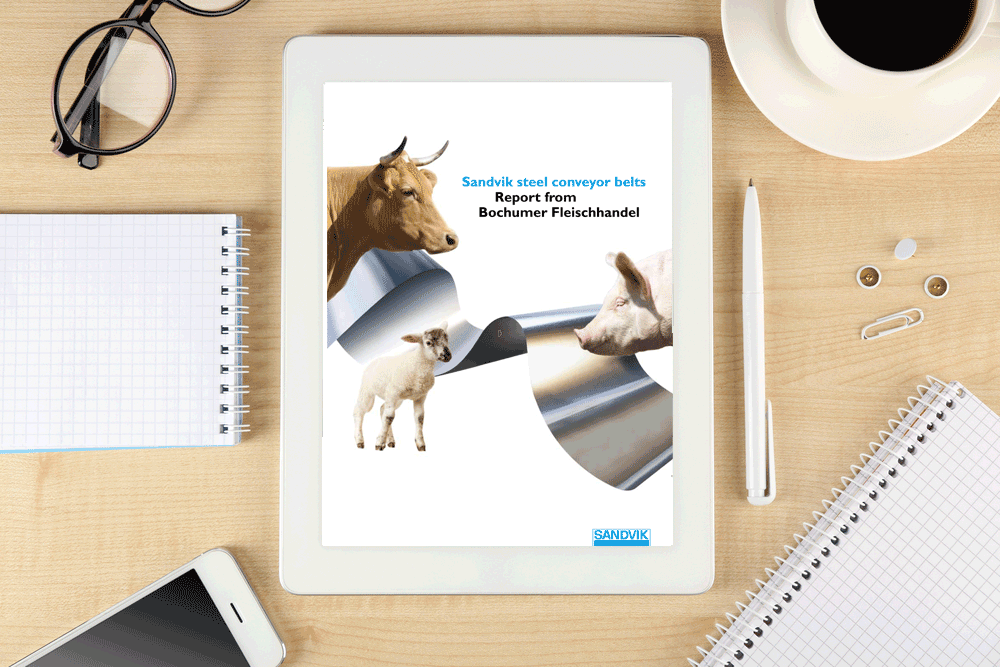
Stainless steel conveyor belts in operation: A report from Bochumer Fleischhandel.


Find out how operational savings & hygienic capabilities of stainless steel belting within meat processing makes it “the obvious first-choice solution”.
5 September 2012 | By Maxime Chevalier, EHEDG Member
Historically, maintaining the hygiene of a food process required a complete or partial disassembly and manual cleaning of every component (Cleaning out of Place: COP). The 1950’s saw the development of a method to clean the equipment without dismantling (Cleaning in Place: CIP) with the benefit of better repeatability, reduced…

